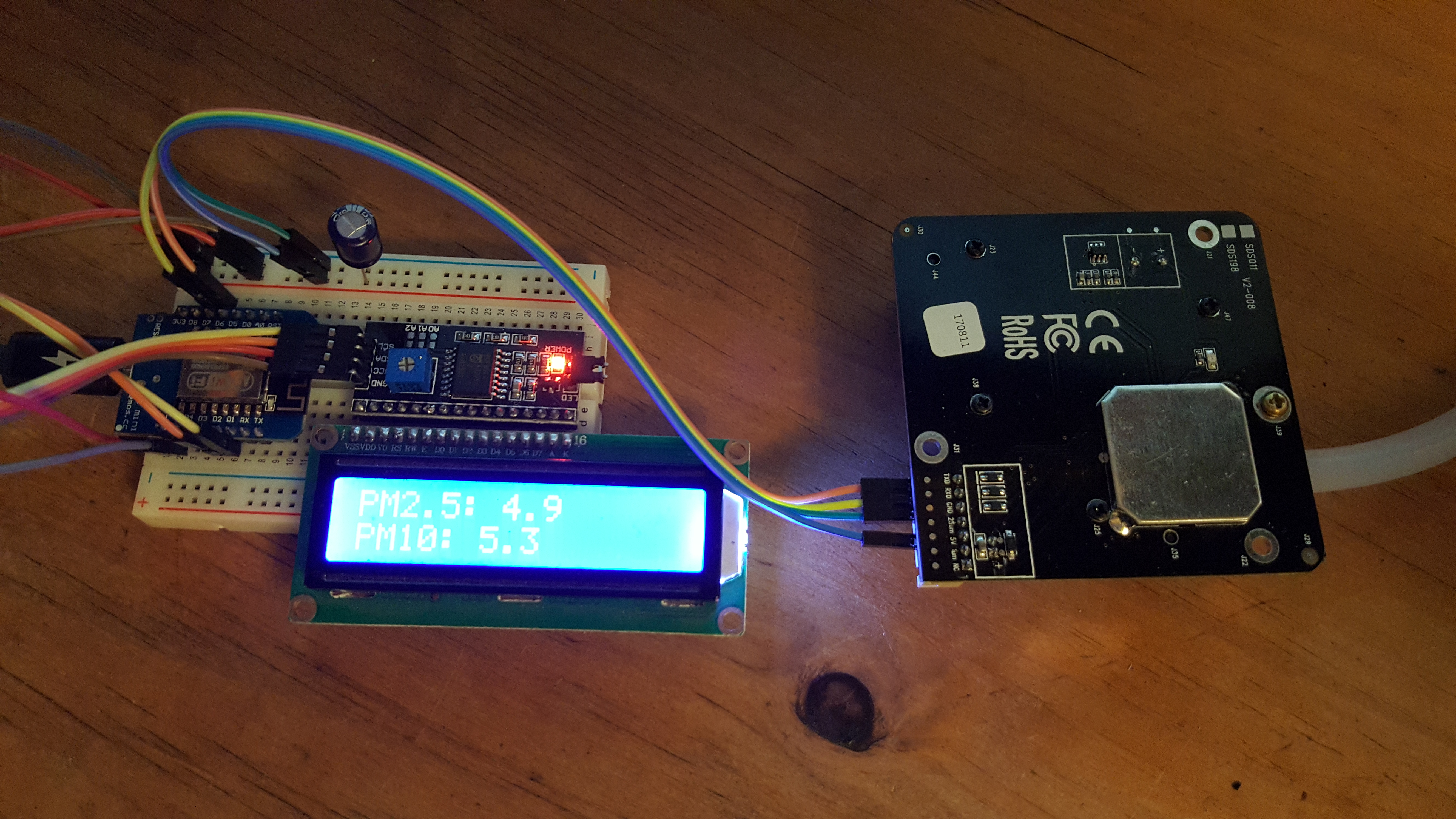
Archived from radmon.org + more - originally posted 18/09/2017 I've been working on an air quality monitor over the weekend. I have a working model that samples and logs every 5 minutes into various .csv files that are used for drawing graphs. It is a work in progress, still much to do. Take a look here: https://www.schmoozie.co.uk/airquality/ Please ignore the data as it is not accurate as is just for testing purposes at the moment. I'll be dumping the collected data and starting from scratch when I get this into an enclosure and mounted properly outside. (All data shown on the page is
Geiger Counters, Radiation, Electronics, Projects and Other Random Stuff
Welcome to my lab! Here I write about Geiger counter and radiation related things, experiments, projects and general musings.
-
-
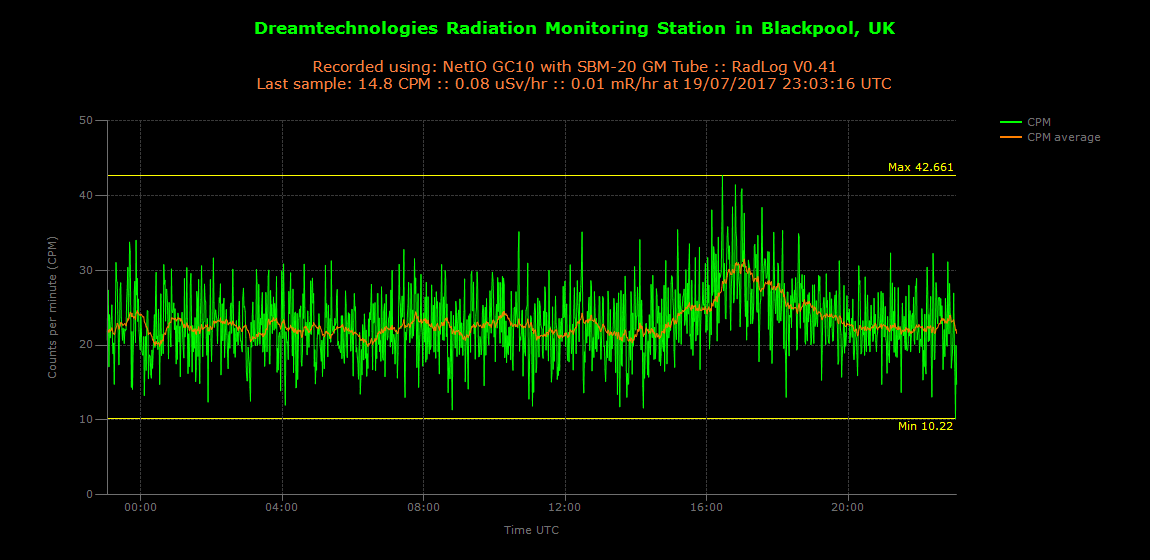
Archived from radmon.org - originally posted 19/07/2017 Blackpool UK - 19 July 2017 - Started around 17:00 BST / 16:00 UTC During quite a downpour today, 20mm in one hour. At it's peak was 65mm/h. Background radiation increased by approx 50% / 11CPM over a 2.5hour period. Not much by any means but still an indication there was some radioactive substance in the rain. Please note the Radmon graphs are UTC and the rain graphs are BST (UTC + 1) and so there is an hour difference between them. What caused it? I could be anyone's guess. Radon causing decay products to get caught up in the rain?
-
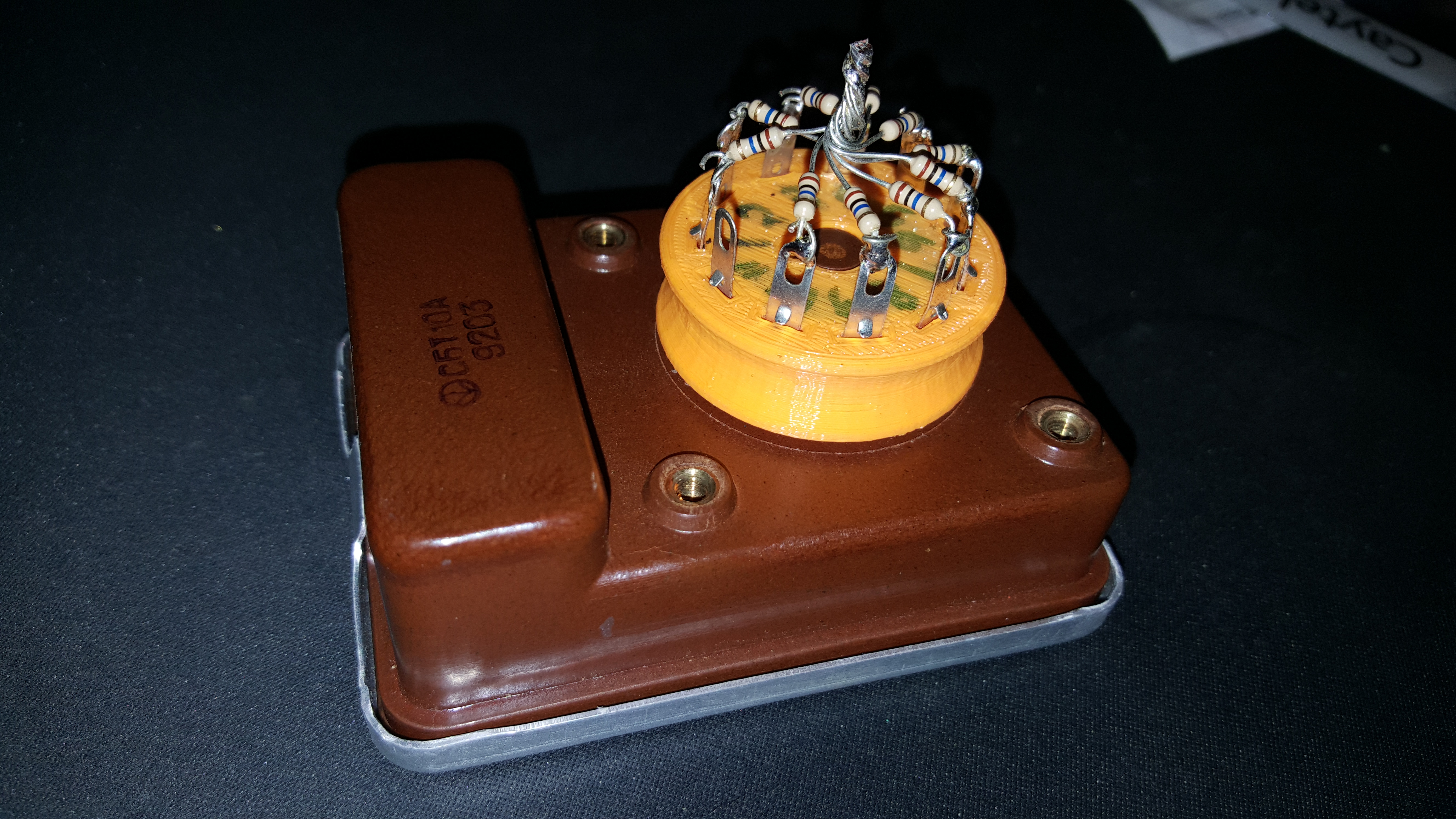
(Paraphrased) Archived from radmon.org - originally posted 19/03/2017 A radmon.org user was having avalanche issues with their SBT-10 Geiger Muller tube. Doing a little research I found a little information stating that each anode on the GM tube (there is ten in total) should have it's own quenching resistor. I have mine set with a 10Mohm on each anode (see pic below) and appears to work OK, although I haven't had it running for long and just some simple tests. When I got it I scoured the web looking for info but it seems there is very little. One recurring theme was that the voltage and
-
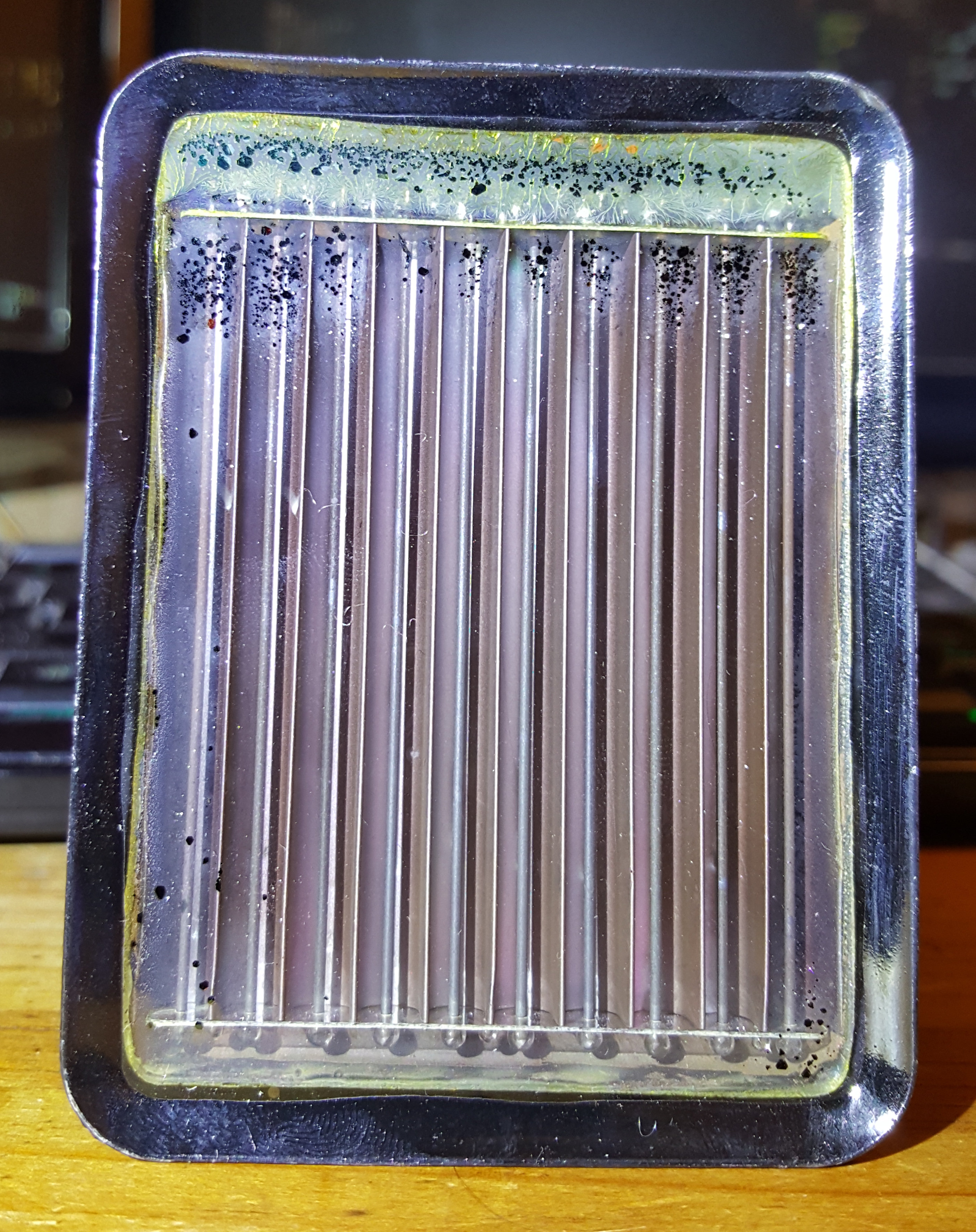
Archived from radmon.org - originally posted 19/03/2017 A radmon.org user posted a question asking what the black spots were in his SBT-10. I had recently bought one of these from a seller in Ukraine and mine too has the black spots similar to the one posted on radmon.org. The seller assured me that mine was NOS (new-old-stock), meaning whilst it is old, it has merely been stored for the time and never used. It appears to be working correctly regardless of it's condition. I tested each element separately and each reads around the same CPM as the others so I'm assuming that whilst cosmetically
-
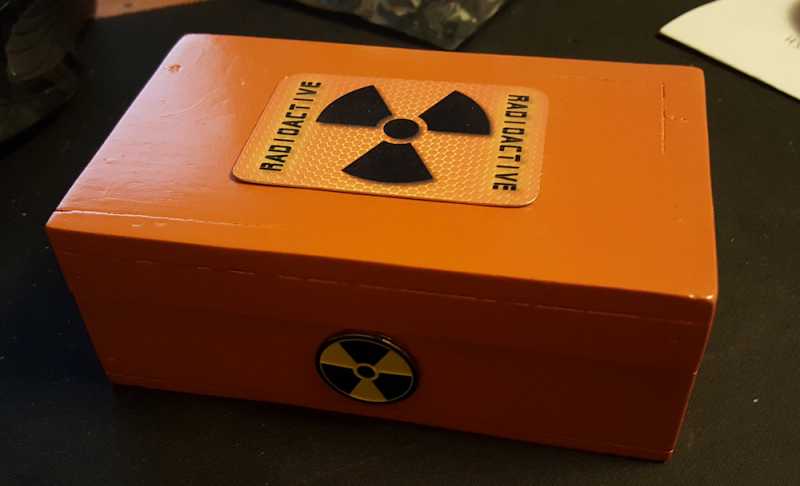
Archived from radmon.org - originally posted 11/08/2016 I have always been a little dubious about leaving radioactive test sources just laying around, although they emit small amounts of radiation. I knocked up a little lead lined box over the weekend to keep my test sources in. The box is just one of those cheapo wooden boxes from India (or somewhere) that you see for sale in markets and such that I lined with 2mm lead flashing (used above windows), painted bright orange with some paint left over from an old project. I added a label on top that is from a check source I bought from ebay and a
-
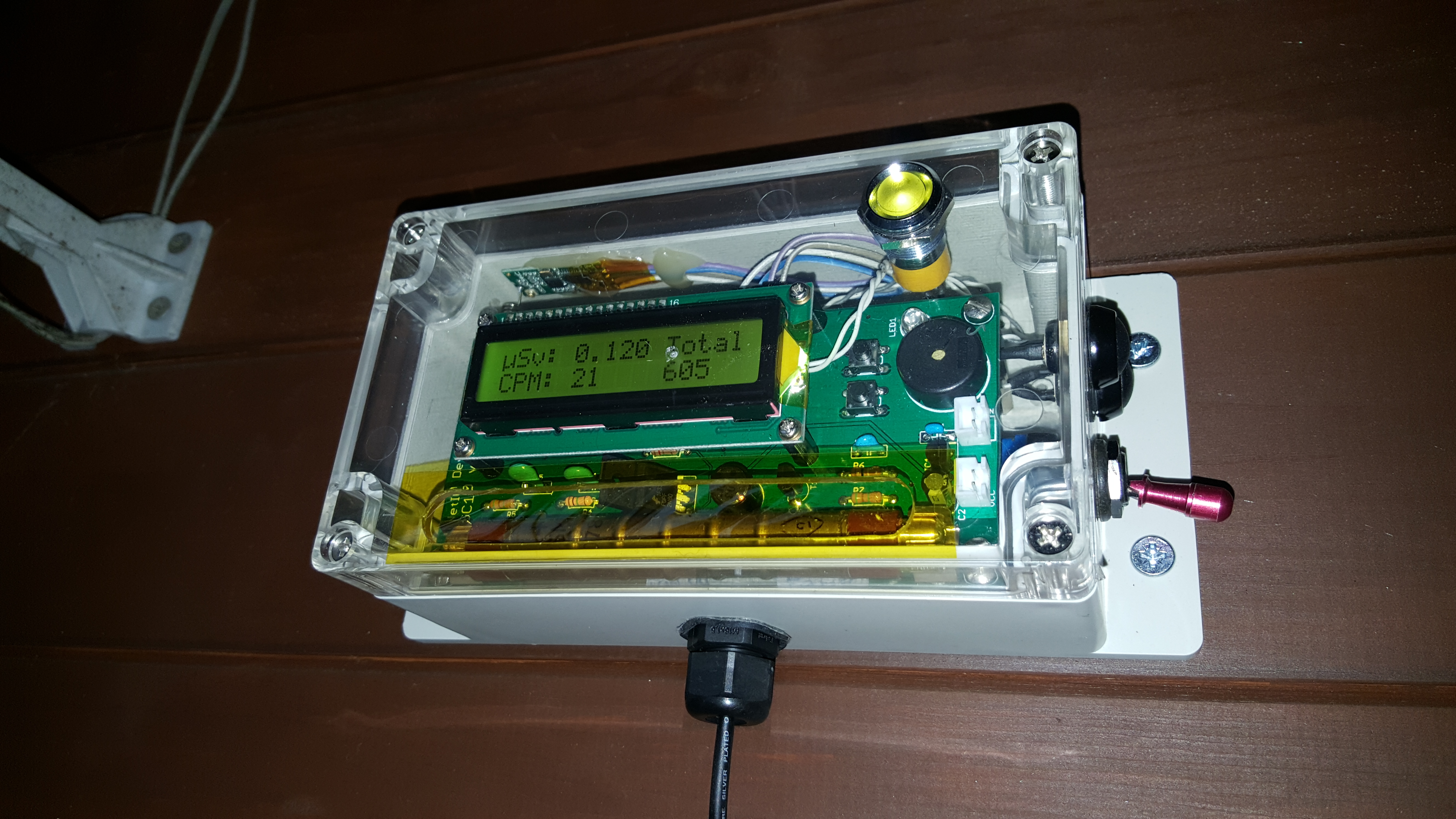
Archived from radmon.org - originally posted 04/04/2016 I have finished up building/setting up my home radiation monitoring station and is all up and running. :cheer: https://www.schmoozie.co.uk/radmon/ (currently offline.) I won't go into too much detail as it is pretty much just a NetIO GC10, in an enclosure with a couple of buttons and switches added. It is mounted outside under a canopy on my workshop so rain is no issue and I have used all sealed switches/buttons etc with rubber gaskets on each to seal it up nicely. The window for the tube at the front is covered with some Kapton tape to
-
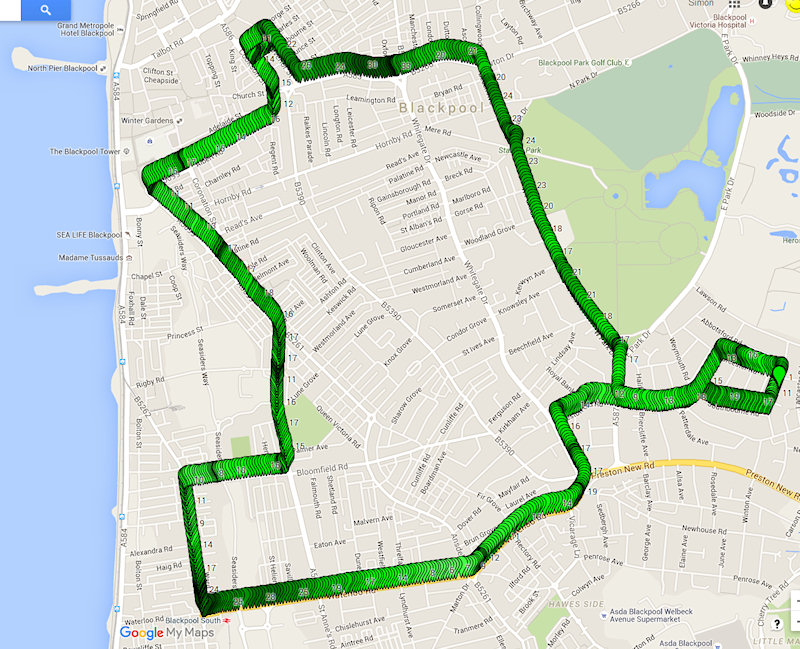
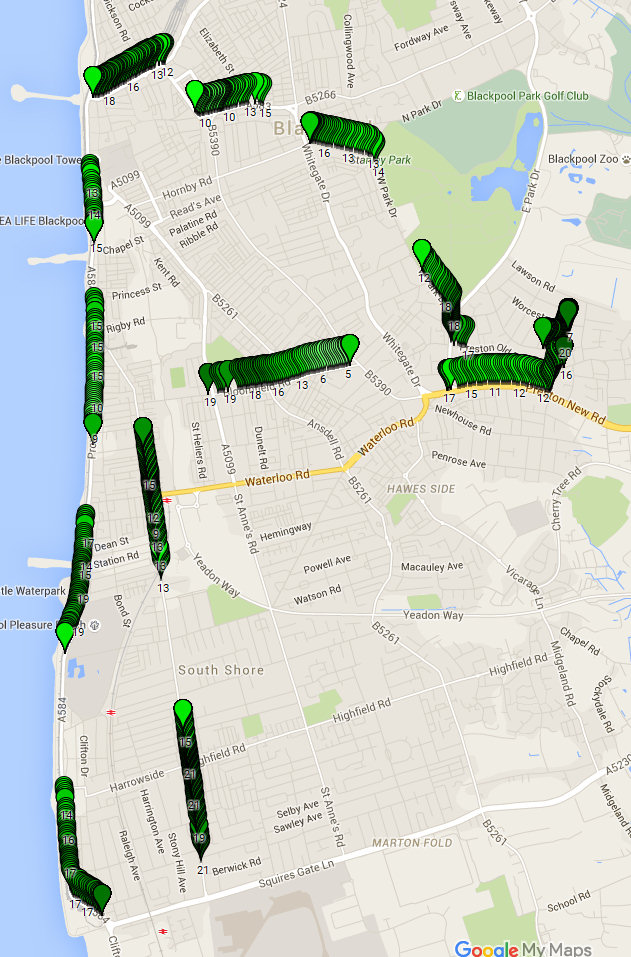
Archived from radmon.org - originally posted 20/03/2016 After some more testing and investigation I found the issue in sketchy GPS was actually the code. I've fixed it and the results are much, much better. There is just one tiny issue now where the CPM being read from the counter is recorded occasionally with an extra digit or two counts on one record. I reckon once that is sorted I can call it version 1.0 :) I have updated the download link with the latest code. Here are the results so far: https://www.google.com/maps/d/edit?mid=zasLAdbQXqtw.kInoUYbBsJO8&usp=sharing I changed the way
-
Archived from radmon.org - originally posted 19/03/2016 I have sorted the battery issue by adding a couple of 18650 Lipo's and a buck converter to regulate the voltage to 5.0V. That seems to be holding up well. The entire unit (logger and counter) consume about 10ma at 20CPM background radiation so roughly working out if my batteries are 2000mAh (they state 2600mAh but I doubt I will get that) and the unit uses 10mA then it should last for around 200 hours! I just need to sort a charging circuit now to charge the batteries when the unit is powered from 12v from the car, or mains adapter. I
-
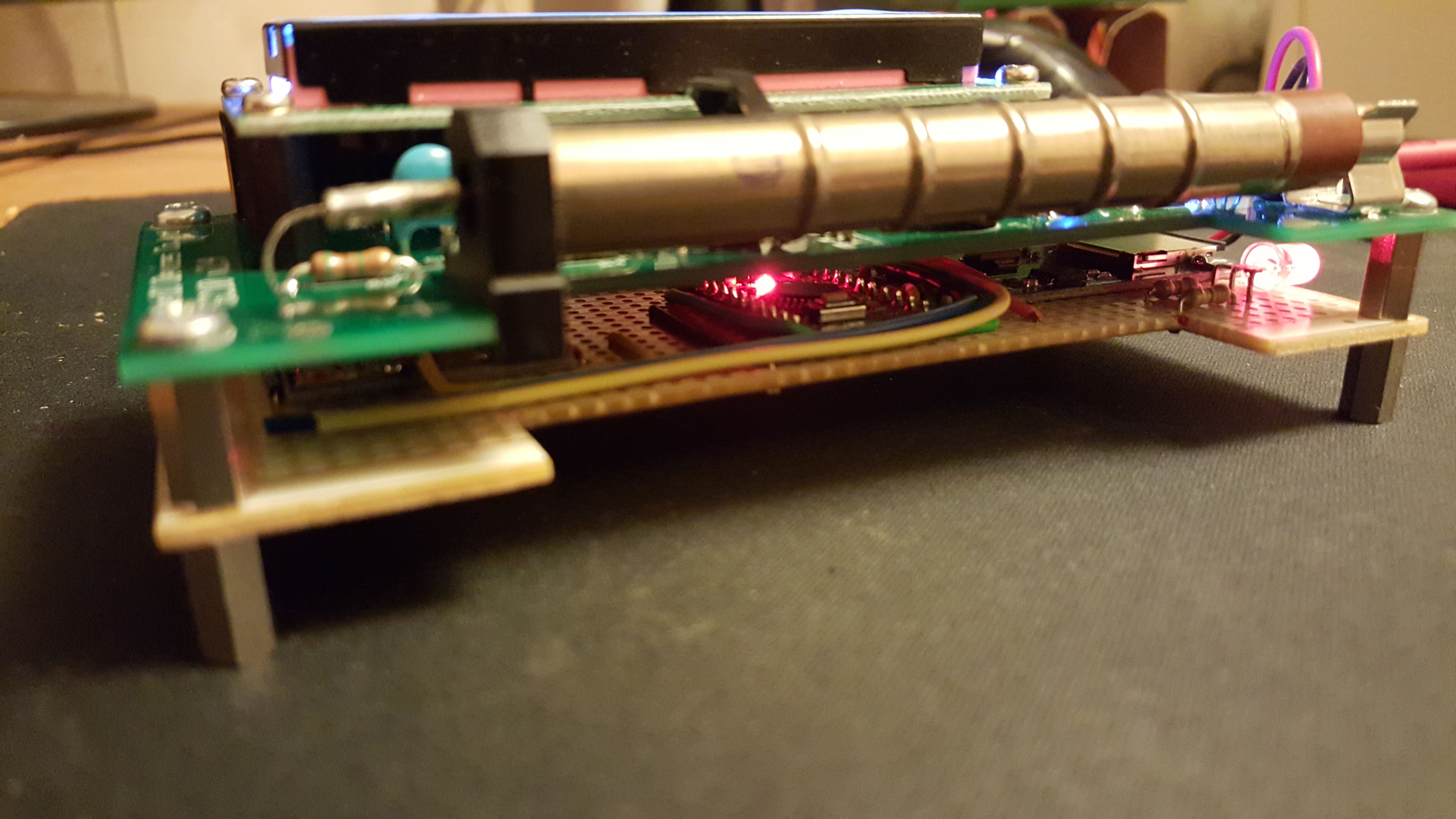
Archived from radmon.org - originally posted 17/03/2016 I recently bought myself a DP-66M from ebay, then another one, then a NetIO GC-10 and I have another on the way. Maybe a different one soon? It's fair to say I have been bitten by the Geiger counter bug! I am building a static outdoor monitoring station at home, monitoring 24/7, but currently waiting on parts from China. In the meantime I have been playing with the GC-10 and built a prototype mobile GPS logging unit to take on my travels. I live not too far from Heysham power station and the Westinghouse Springfields nuclear fuel
-
Hello World! This is I, Mr Blinky. Welcome to my lab! Here I will write about Geiger counter and radiation related things, experiments, projects and general musings. Please note that the image above is actually NOT me...